What Will Nolensville Leave for America's 500th Independence Day?
A Time Capsule Worth More Than Gold
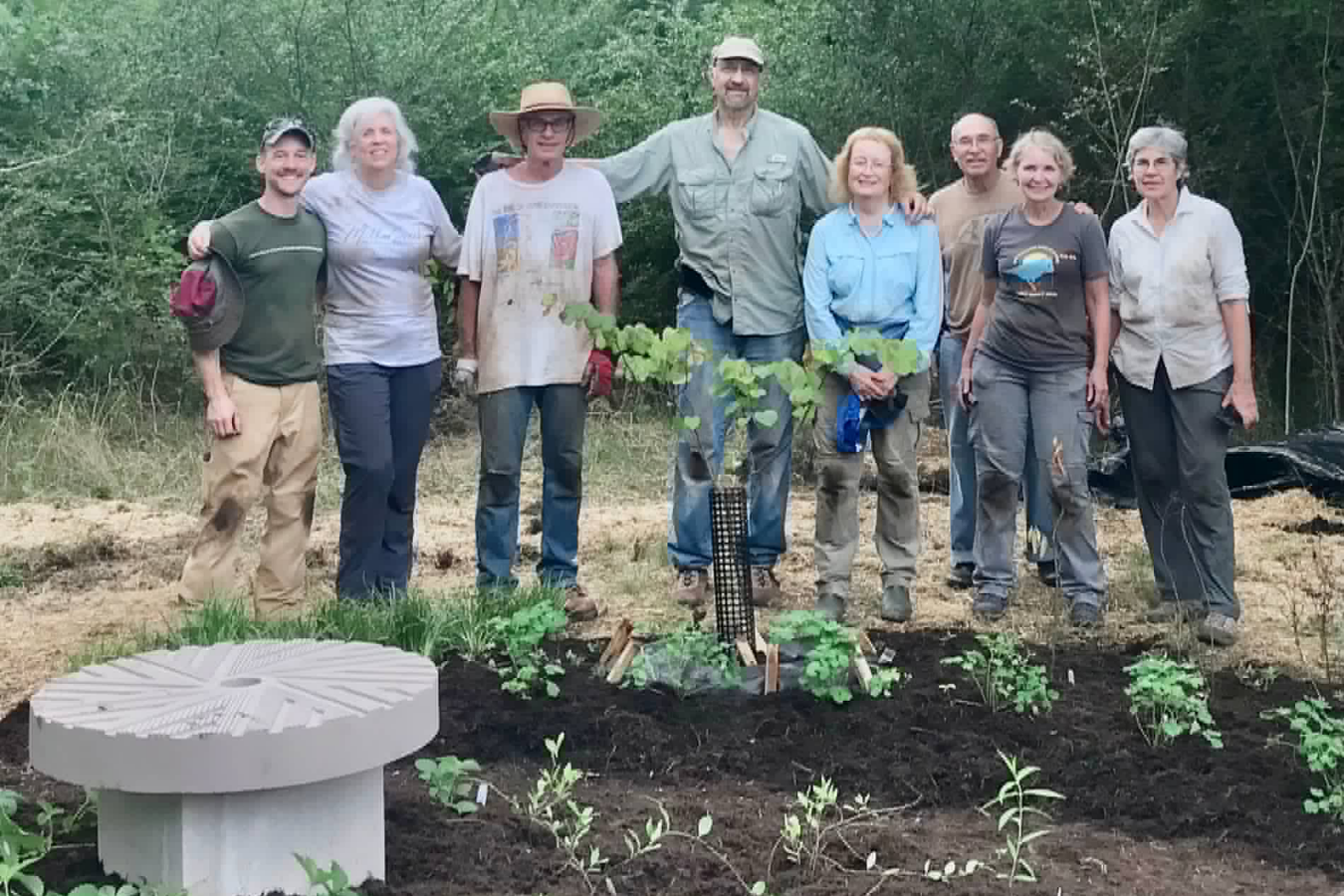
Gretchen Anderson (second from right) and the Mill Creek Watershed Association following the initial planting of the butterfly Monarch waystation at Nolensville High School.
In celebration of America's 250th anniversary, Philadelphia is burying a 900-pound time capsule to be opened in 2276 with contributions from every state and territory. This historic milestone makes one wonder: what unique gift could Nolensville offer its descendants 250 years from now?
In the 36 years since my family and I moved to Nolensville, I've come to believe that our secret isn't anything money can buy. Our strength lies in our remarkable people: Town leaders, staff, and committee members, Friends of Nolensville Parks, the Nolensville Historical Society, the Nolensville Running Club, the Nolensville Art Guild, our clergy, teachers, coaches, police, firefighters, and local business owners.
While we cannot preserve those community members in a time capsule, we must protect what brought them here in the first place, and what will uphold generations to come: the headwaters of Mill Creek. Flowing through the heart of our region, Mill Creek sustains more than 314,000 people and supports 68 of Tennessee's species of greatest conservation-need. This vital waterway is the ultimate gift I would choose to preserve for our nation's 500th Independence Day residents.
Local Wildlife at Risk in Our Watershed:
Monarch butterflies: These remarkable insects migrate annually between Canada and Mexico, passing right through Nolensville. Local conservation efforts include dedicated waystations at Nolensville High School and behind the historic school museum. These waystations are critical; western monarch populations have dropped more than 95% since the 1980s, leading the International Union for Conservation of Nature to classify the species as endangered.
Native Bees: Bumblebees, mason bees, and mining bees pollinate much of what grows here. Because many forages are within just a square mile, losing a single lost meadow or greenway can devastate local populations.
Freshwater mussels: These quiet engineers filter our streams. A single mussel can clean roughly 12 gallons of water a day. Tennessee hosts more than 130 mussel species, among the richest diversity in the world, but historic river modification and pollution have severely impacted them.
We've already lost the American Chestnut, the Carolina Parakeet, and the Turgid Blossom Pearly Mussel from these waters forever. A renowned entomologist Doug Tallamy points out, 75% of U.S. land is privately owned. This means small yard-by-yard choices, multiplied across a community can collectively equal the conservation power of a national park.
Let's do it!Small Actions with a Big Impact:
Plant native flora: Choose milkweed for monarchs, alongside native bee balm and buttonbush for bees.
Remove invasives: Replace non-native, invasive plants with indigenous species.
Skip the chemical pesticides. These treatments inadvertently eliminate fireflies, frogs, and butterflies along with target pests.
Consult professionals: Ask your landscaper if they offer native planting options.
Leave the leaves: Let some fallen leaves stay put this autumn to provide vital winter habitat.
It's too late for the species we've already lost. However, the unique gift we can hand down to the Nolensville of 2276 is already running through our own back yards. We just need to protect it.
Gretchen Bayless Anderson